
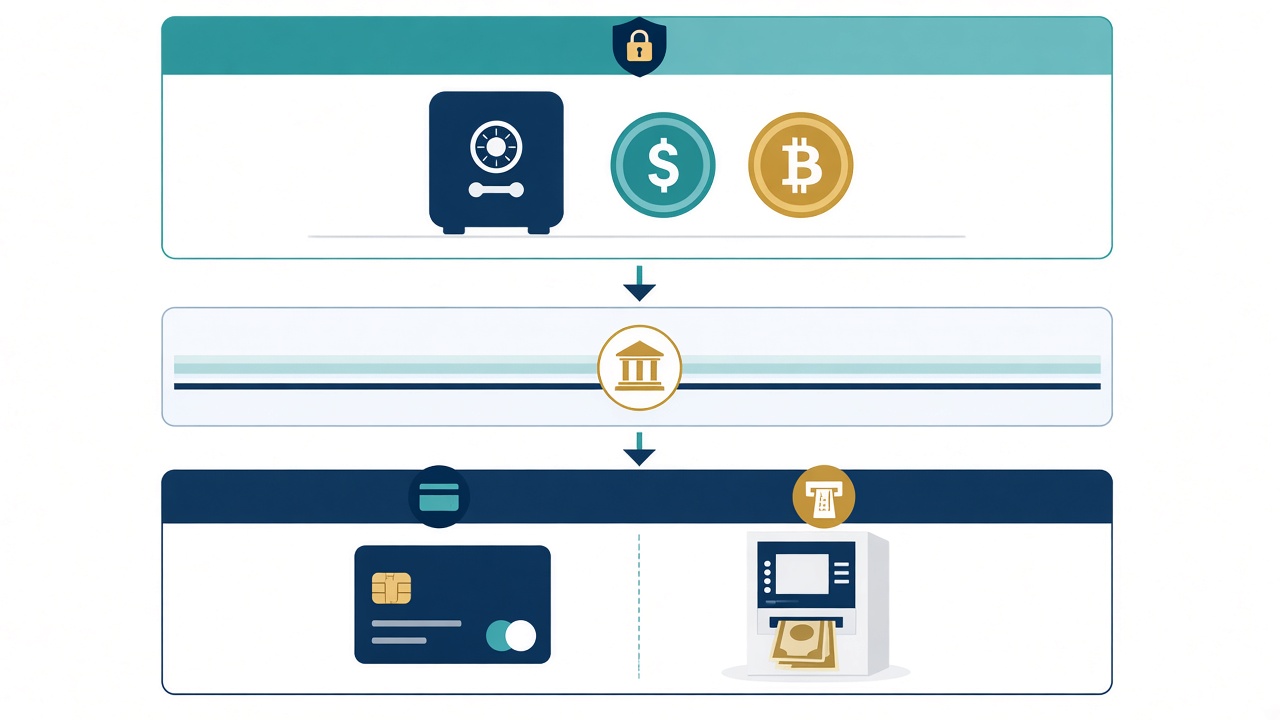
1. The big picture
Think of your money in three layers. The bottom layer is the vault (your keys). The middle layer is a thin bank float for bills. The top layer is cards and cash for daily life. Crypto lives in the vault. Dollars only visit the bank and cards when you need them.
2. In plain English
You do
- Hold keys on a hardware wallet (Ledger or Trezor)
- Day-to-day: Rabby (USDC on Base) + Sparrow (BTC)
- Keep value on-chain in your addresses
- Swap on DEXes from your wallet when needed
- Send only a spend-sized amount to Cash App when you need cash/card
- Run business spend on Mercury virtual cards inside MD Hub
You do not
- Park large balances on any exchange
- Use Coinbase (exchange, card, Commerce, or as vault)
- Leave big BTC sitting in Cash App overnight
- Treat Mercury or Stripe as a crypto wallet
- Put seed phrases in MD Hub, chat, or screenshots
- Use street OTC / mixers
3. What to hold (and why)
Most liquid crypto should be dollars that stay dollars on-chain. Bitcoin is the long-term reserve. Tiny amounts of ETH or SOL only pay network fees.
Suggested treasury mix (working capital view)
Illustrative target split for liquid crypto once float band is set — adjust to your risk comfort.
USDT is a backup liquidity bridge only. Prefer USDC for US banking. Avoid random alts and unregulated “USD*” tokens as treasury.
| Asset | Role | How it becomes card/cash |
|---|---|---|
| USDC on Base | Primary working capital in self-custody | Business: sell/ramp → Mercury → virtual card. Personal: swap or sell ramp; keep a BTC sleeve for Cash App speed. |
| BTC | Reserve + personal same-day pipe | Send spend-sized amount to Cash App → sell → Cash App Card / ATM → leftover BTC back to hardware. |
| ETH / SOL | Network fees | Not for spend. |
4. The four rails (who does what)
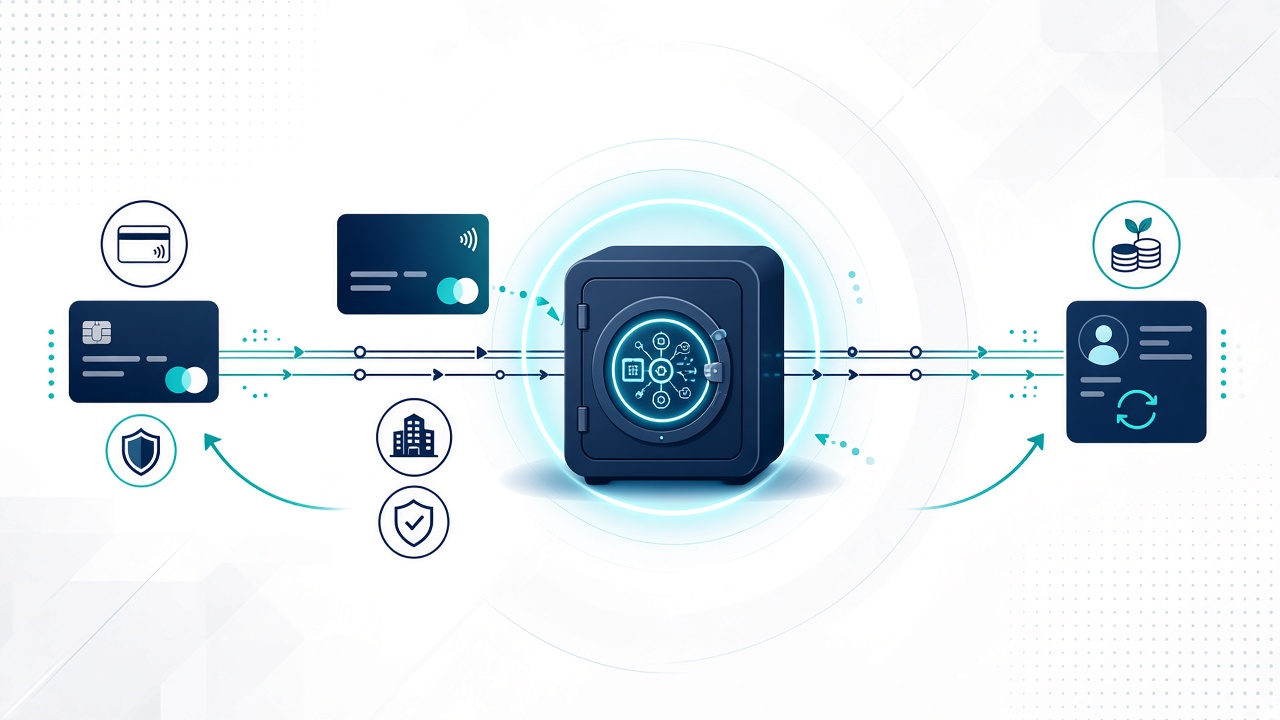
Architecture map
SVG overview of vault vs. edge. Only the vault holds long-term crypto.
Self-custody wallet Vault
Hardware cold store for bulk USDC + BTC. Hot drivers: Rabby/Frame for EVM USDC on Base; Sparrow for Bitcoin. DEX swaps only from your wallet. MD Hub never stores private keys — watch-only balances live under Transactions → Bank.
Cash App Personal card / ATM
Best personal same-day BTC→USD→card path that is not Coinbase. Send only what you will spend soon. Sell to USD. Swipe Cash App Card or ATM. Withdraw leftover BTC back to hardware. Cash App is BTC-native, not USDC.
Mercury Business cards
USD only — no USDC/BTC deposits. Thin float of 1–4 weeks of known bills. Virtual debit cards with limits and freeze already live in MD Hub Transactions (mercury_cards.php).
Stripe Income + on-ramp
Customer cards via Payment Links → payout to Mercury. Optional Crypto Onramp can buy USDC/BTC into your wallet address. Later: stablecoin pay and stablecoin-backed cards when your account is eligible. Do not park treasury in Stripe balances.
| Rail | Holds long-term crypto? | Crypto → card job |
|---|---|---|
| Your wallet | Yes — vault | Source of USDC/BTC |
| Cash App | Pipe only | Personal same-day: BTC → sell → Card / ATM |
| Mercury | No crypto | Business thin float + MD Hub virtual cards |
| Stripe | Not a vault | Income in; optional on-ramp to your address |
5. Same-day playbooks
5.1 Personal card or ATM (primary daily path)
If treasury is mostly USDC: swap a sleeve to BTC in self-custody (or use a non-Coinbase USDC sell ramp to debit). Keep a small BTC hot buffer so Cash App stays fast.
5.2 Business / ads / SaaS spend (MD Hub)
5.3 Income without fat bank balances
5.4 Accept crypto from a client (no Coinbase Commerce)
- Near term: invoice shows your USDC (Base) address + amount + reference; client sends on-chain; you confirm the tx hash.
- When enabled: Stripe stablecoin payments — client pays USDC, you settle to Stripe/Mercury fiat.
6. Charts & money map
Where a dollar of value should sit overnight
Target resting place after each day’s sweeps — not a prediction of returns.
Same-day speed by path (typical routine target)
Lower bar = faster. These are operating targets once accounts are KYC’d and tested — not SLAs.
Personal stack
- BTC (and USDC) in self-custody
- Cash App for spend-sized BTC only
- Sell → Cash App Card / ATM
- Leftover BTC → hardware same day
Business stack
- Stripe income → Mercury
- Float band covers known bills
- Mercury virtual cards in Transactions
- Surplus → self-custody within 24h
7. What MD Hub already does vs. build later
| Piece | Status | Action |
|---|---|---|
| Stripe checkout, Payment Links, webhooks | Live | Keep payouts pointed at Mercury |
| Mercury accounts & transfers | Live mercury.php | Confirm API token; set float band |
| Mercury virtual cards | Live Transactions UI | Primary business crypto→card once USD is on Mercury |
| Plaid | Live | Watch Mercury (+ funding account if useful) |
| Cash App | Personal app | Operator setup; log off-ramps in Budgets for now |
| Stripe Crypto Onramp | Not wired | Phase 1: enable; optional “buy USDC to my address” |
| Stablecoin pay / Issuing cards | Later | Phase 2–3 when account eligible |
| Watch-only wallet balances | Live Transactions → Bank | Public BTC / Base / ETH addresses only — no private keys |
8. Legal & security basics
Compliance posture
- KYC’d US venues only
- Full lot tracking (tx hashes)
- No mixers
- Entity split: personal vs business
- CPA who knows digital assets
- Cash App BTC sells/spends are taxable events — export history
- MD Hub must not hold private keys
Not legal, tax, or investment advice.
Security rules
- Hardware seed offline only
- Never seed in MD Hub, chat, or screenshots
- Cash App: strong device lock; withdraw BTC after buys
- Mercury cards: low limits; freeze when idle
- Stripe: restricted Dashboard; webhook secrets as today
- Test $50–$100 on every new path before size
9. Week-one checklist (Phase 0)
Hardware + software wallets
Ledger/Trezor live. Rabby + Sparrow paired. $20 receive test on USDC (Base) and BTC.
Cash App drill
Verified account + Cash App Card. BTC withdraw-to-hardware tested. Sell → card $100 drill.
Mercury + MD Hub card
API green. Issue a virtual card with $50 limit. Freeze test in Transactions.
Stripe → Mercury
Payout destination = Mercury. Confirm a Payment Link lands USD on Mercury.
Float band
Write the Mercury target balance (1–4 weeks of known bills). Sweep surplus to self-custody within 24 hours of cleared funds above the band.
Optional same week
Apply/enable Stripe Crypto Onramp if the account is eligible.
10. How you know it works
- Standing crypto vault = self-custody addresses only (Cash App BTC near-zero overnight).
- Personal same-day card/ATM via Cash App ≤ 1 hour routine.
- Business card spend via Mercury virtual cards without growing a bank savings balance.
- Stripe → Mercury → wallet surplus sweep within 24 hours of cleared payout above float band.
- Zero Coinbase dependency.
Related backoffice plan
Full strategy text lives in Plans as plan_id 172 — slug crypto-to-usd-operating-plan — title Crypto to card — self-custody + Stripe / Mercury / Cash App (project 26 · MD Hub · status QA).